



Choose Language: EN CN BH VI

Can a Hernia Gradually Change the Way You Move?

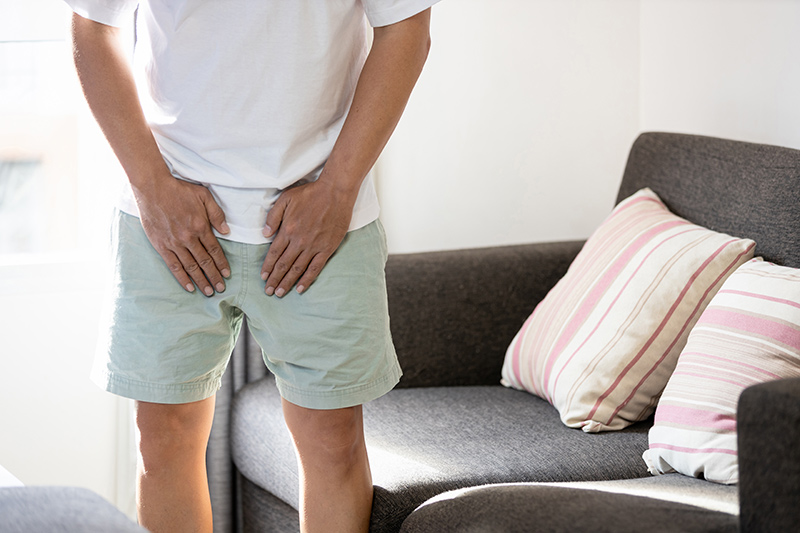
Man experiencing discomfort from a hernia while getting up from a sofa
Dr Dennis Koh

Dr Dennis Koh

Medical Director & Senior Consultant Colorectal Surgeon

MBBS (Nottingham), B Med Sci (Nottingham), MMed (Surgery), FRCS (Edinburgh), FAMS

Dr Sharon Koh

Dr Sharon Koh

Senior Consultant Colorectal Surgeon

MBBS (Singapore), MMed (Surgery), FRCS (Edinburgh), FAMS

Dr Pauleon Tan

Dr Pauleon Tan

Senior Consultant Colorectal Surgeon

MBBS (Singapore), MMed (Surgery), FRCS (Edinburgh), FAMS

A hernia does not always disrupt your daily life in an obvious way. When symptoms develop gradually, you may simply become accustomed to working around them and consider your routine largely unchanged.

It is often only when you think back to what used to feel effortless that these adjustments become apparent. Recognising this gradual shift can help you understand whether a hernia is having a greater impact than you initially thought.


How Your Body May Compensate for a Hernia

A hernia occurs when tissue or part of an organ pushes through a weakened area in the surrounding muscle or tissue. When a particular movement causes pulling, pressure or discomfort, you may naturally find another way to perform it.

For example, you might:

  • Bend more cautiously when reaching towards the floor
  • Turn your whole body rather than twisting at the waist
  • Use your arms more when getting up from a chair
  • Change how you lift or carry everyday objects

These adjustments are known as compensation and may develop without you consciously noticing them. They do not necessarily mean that the hernia is worsening, but they can show that your symptoms are beginning to influence how you move.

Subtle Changes in Your Posture

A hernia may also influence how you hold your body, even when you are not performing a particular task. If certain positions cause discomfort, you may gradually adopt a posture that feels more comfortable.

For example, you might lean slightly forwards or shift your weight away from the affected area. Because these changes often develop gradually, they can become habitual before you realise your posture has changed.

Maintaining these positions over time may place different demands on the muscles around your back, hips and abdomen. While discomfort in these areas can have many causes, it is worth mentioning during an assessment if it develops alongside changes in how you hold your body.

Man discussing his symptoms with a hernia surgeon during a consultation

When Movement Changes Should Be Assessed

Movement changes alone cannot indicate the size or severity of a hernia. What matters is whether they are occurring alongside other signs that the condition may be progressing or becoming more troublesome.

Consider seeking medical advice if you notice:

  • Increasing pain or discomfort around the hernia
  • A bulge that appears to be getting larger
  • Greater difficulty with lifting, bending or exercising
  • Symptoms that repeatedly occur during everyday activities
  • An increasing need to modify your routine because of discomfort

A doctor can assess the location and characteristics of the hernia to determine whether monitoring or hernia treatment may be needed.

Sudden severe pain, vomiting or a hernia that becomes firm, tender or cannot be pushed back in requires urgent medical attention, as these symptoms may indicate a complication.

Recognising the Impact of a Hernia on Daily Life

You do not have to wait until a hernia prevents you from doing something completely before considering how much it is affecting you. If you find yourself increasingly adjusting your routine around discomfort, an assessment can help you better understand how your hernia is affecting you. At our , care is provided under Dr Dennis Koh, alongside Dr Sharon Koh Zhiling and Dr Pauleon Tan Enjiu.

Reach out to the clinic to arrange a consultation, discuss your concerns and receive guidance on the next steps for managing your hernia.

FAQs About Hernias and Everyday Movement

  • Can a hernia feel worse later in the day?

    Yes. Some hernias become more noticeable after prolonged standing or physical activity because pressure on the affected area can increase throughout the day. Symptoms may then ease when you rest or lie down.
  • Can coughing make a hernia more noticeable?

    Yes. Coughing increases pressure inside the abdomen and may cause a hernia to protrude more noticeably or become uncomfortable. A persistent cough can repeatedly aggravate symptoms and should also be assessed for its underlying cause.
  • Can a hernia make climbing stairs uncomfortable?

    Yes. Climbing stairs engages the abdominal and lower-body muscles, which may make some hernias more noticeable. You might experience pulling, pressure or discomfort that is less apparent when walking on level ground.
  • Why does my hernia feel different when I stand up?

    Standing increases the effect of gravity and pressure on the abdominal wall, which can make some hernias more prominent. You may therefore notice a bulge or pulling sensation when standing that becomes less noticeable when lying down.
  • Can getting in and out of a car aggravate a hernia?

    It can. Getting into or out of a car involves bending, twisting and shifting your body weight, which may trigger discomfort around a hernia. Repeatedly changing how you perform this movement may be a sign that you are compensating.
  • Should I mention small movement changes during a hernia consultation?

    Yes. Details such as avoiding certain movements, changing how you lift or becoming uncomfortable in particular positions can help your doctor understand how the hernia affects you functionally. These details provide useful context alongside the physical examination.

Meet Our Doctors

Contact Us
Orchard
Novena
Gleneagles
Mount
Alvernia

Colorectal Practice (Orchard)

3 Mount Elizabeth, #12-14
Mount Elizabeth Medical Centre
Singapore 228510

Colorectal Practice (Novena)

38 Irrawaddy Road, #10-28/29
Mount Elizabeth Novena Specialist Centre
Singapore 329563

Colorectal Practice (Gleneagles)

6 Napier Road #02-12
Gleneagles Medical Centre
Singapore 258499

Colorectal Practice (Mount Alvernia)

820 Thomson Rd,
Mount Alvernia Medical Centre A, #03-08
Singapore 574623

Start A Conversation
Our team typically answers quickly.
Have any gastro or colorectal issue?

Click to WhatsApp!

+65 9239 2198

Top